Arman Design: A Multidisciplinary Architecture of Transformation that Activates Innovation
Going beyond the traditional definition of a design office, Arman Design is a team that set out to operate like a product development and innovation laboratory, reshaping the lifestyles of the future. The agency commits to delivering a complete, end-to-end experience—covering every step from the birth of a conceptual idea to the product’s launch and its realization of commercial value.
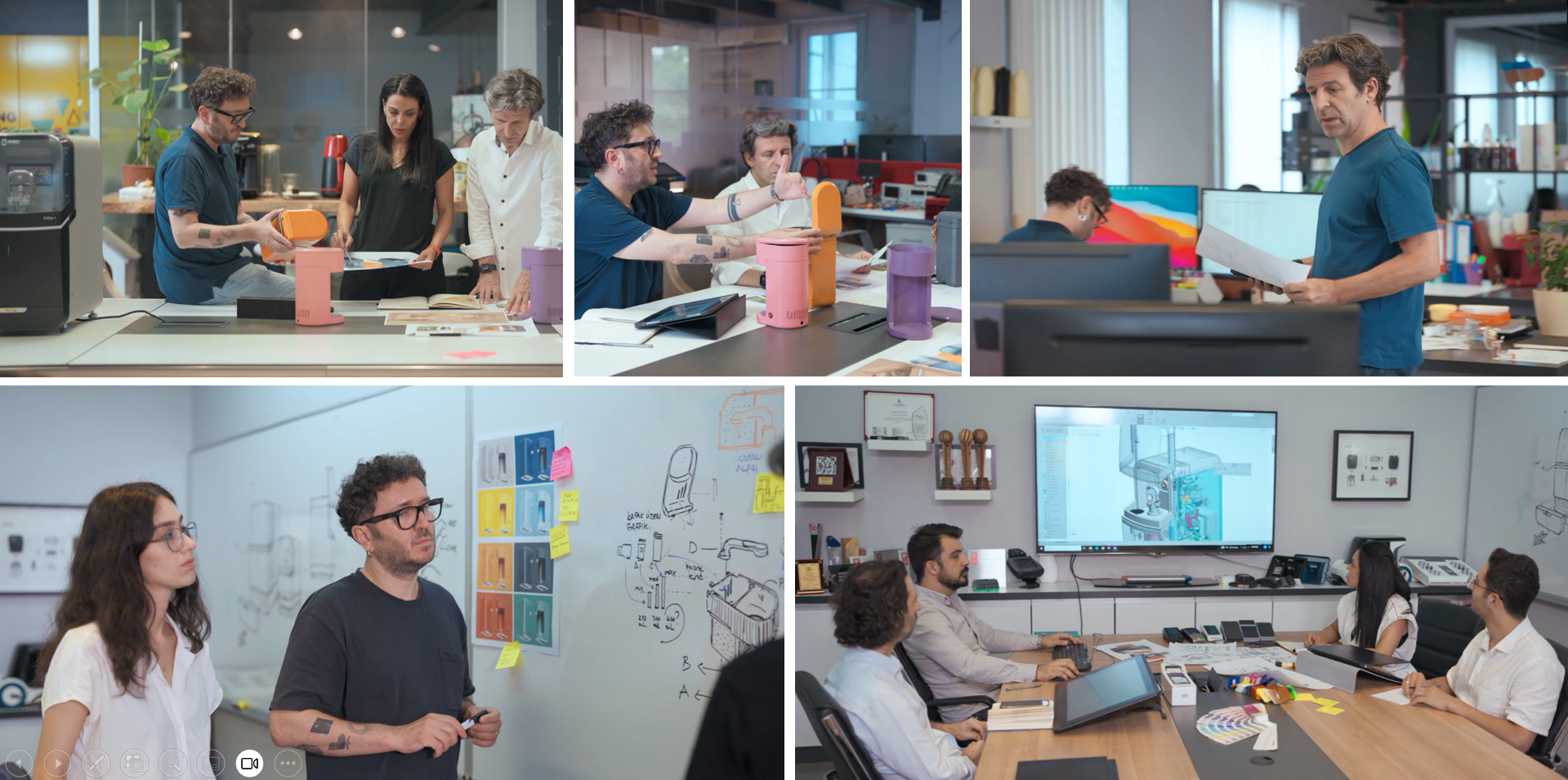
This holistic approach is brought to life by a broad, multidisciplinary team of designers, engineers, and consultants. The team leverages a wide range of technologies, industrial methods, and knowledge domains to activate creative and innovative solutions.
Arman Design’s core mission is to transform technology into human-centered solutions by placing user experience, materials, economics, resources, and—most importantly—the environment at the heart of the process. Their goal is to design products and experiences that connect with users while delivering a dynamic and sustainable competitive advantage.
A Broad Spectrum of Innovative Solutions:
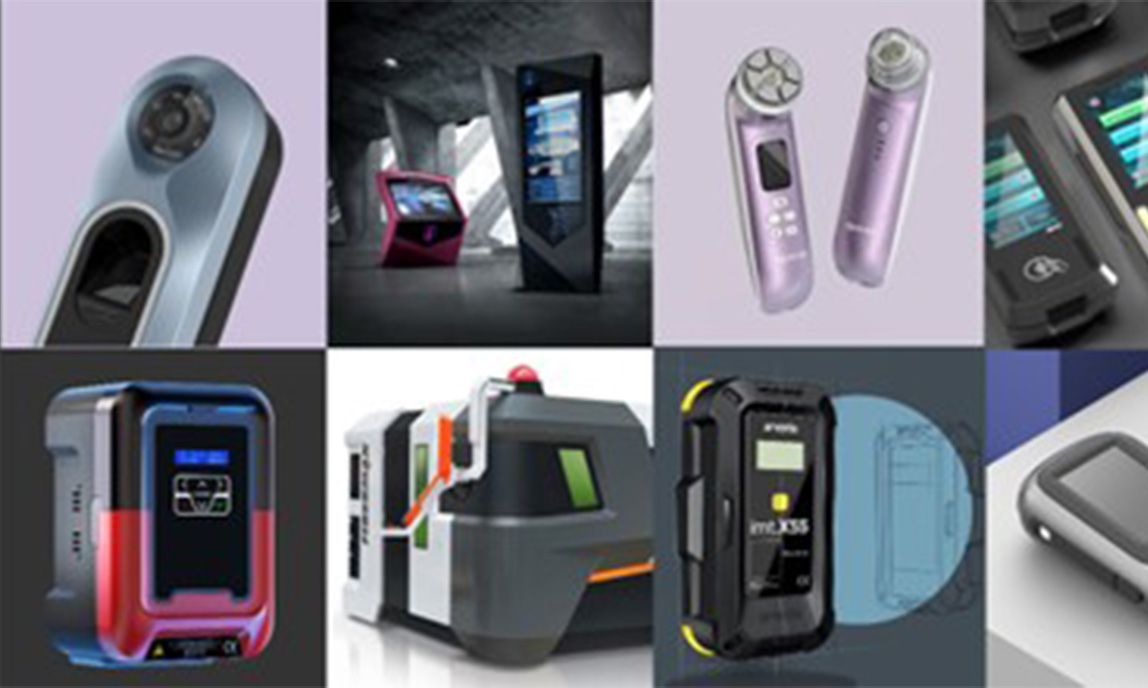
- Industrial Product Design: Projects spanning a wide range of fields, from electronic products and lighting to household goods and industrial equipment.
- Critical Technologies: Active involvement in highly specialized areas such as Medical Devices, Transportation Technologies, and Defense & Security solutions.
- Transforming Public Life: Beyond individual products, they offer Public Design solutions through innovative projects in areas such as Urban Furniture and Public Technologies, strengthening urban identity and adding value to public spaces.
Foundations of Strategic Investment:
For companies seeking long-term competitive advantage, Arman Design positions innovation strategy as a core pillar. Their strategic services shape not only appearance, but the entire business model:
Design and Production Strategies: Through Business Development, Innovation, and Creative Planning services, they create solutions that go beyond the problem itself, enabling clients to unlock their full potential.
End-to-End Support: From conceptual design to prototyping and production; from Engineering Services to Consulting backed by 20 years of agency expertise, every stage of the development process is carefully orchestrated. By keeping client requirements at the center, rational and creative approaches are defined using the right data components.
Creative Process and Technical Implementation Stages
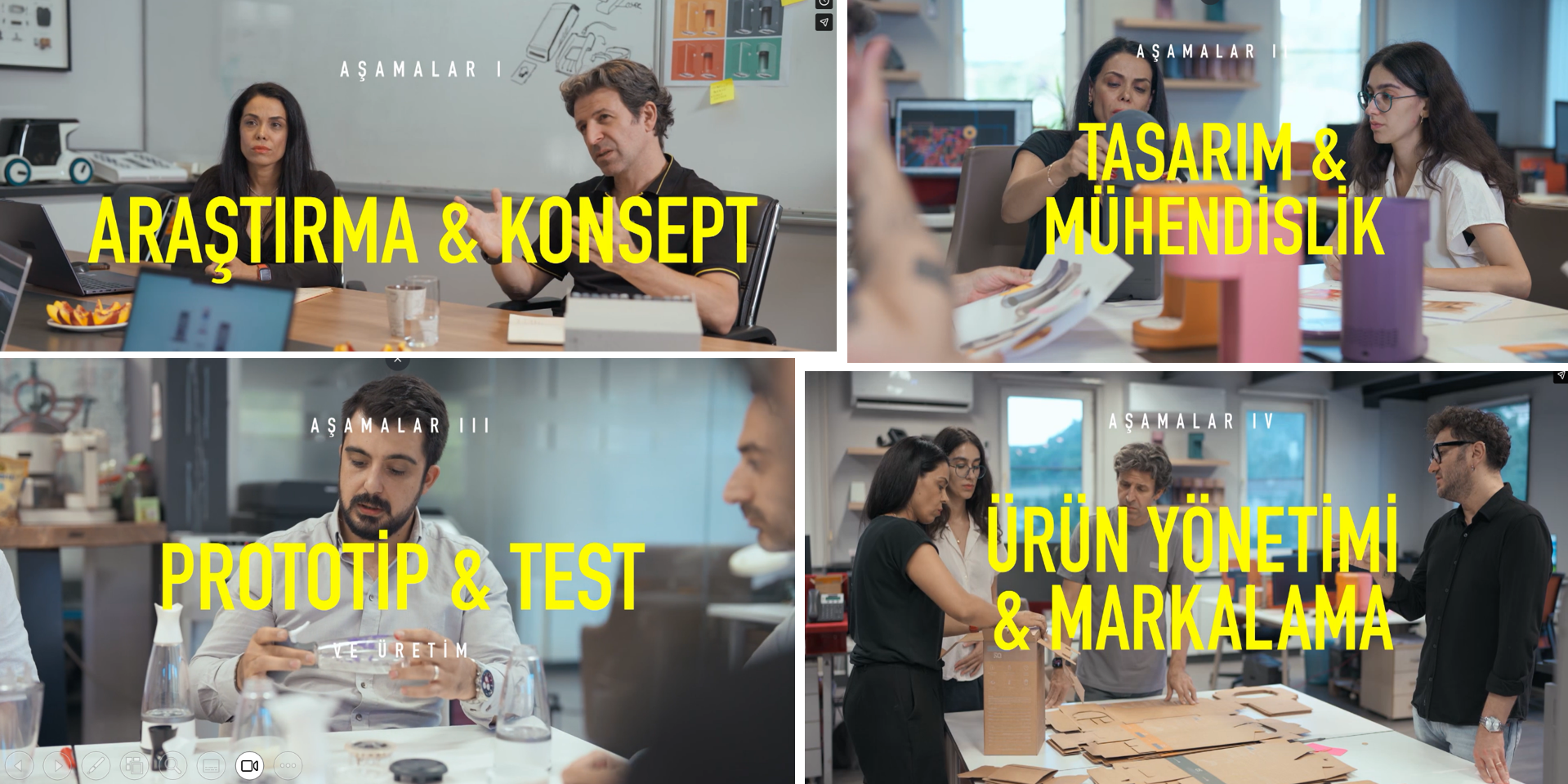
For a successful product to be realized and generate commercial value, the process progresses through six main stages:
1. Idea and Feasibility:
The process begins with understanding customer needs. Feasibility studies include market, competitor, and economic structure analyses, along with technical and strategic evaluations to enable greater innovation.
2. Sketch Phase:
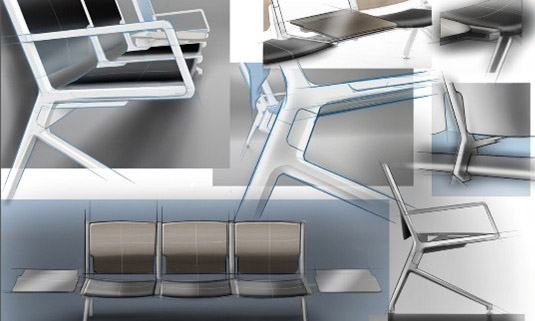
New ideas are explored through conceptual sketches. This dynamic stage is where ideas begin to transform into tangible product design solutions and gain the power to spark the imagination of both users and investors.
3. Form Design:
This stage involves modeling the form evolved from sketches, taking into account the product’s shape, color, style, image details, and market expectations. A detailed design phase follows, with careful consideration of user experience and manufacturability.
4. Engineering:
Design engineering integrates both form and product functionality. At this stage, product engineering, prototype manufacturing, and various structural tests are fundamental. The goal is to develop functional, technologically advanced products that are fully ready for production, through collaboration between mechanical and design engineers.
5. Prototype:
Before mass production, prototypes are manufactured and tested at a 1:1 scale, using real materials and in fully operational form, allowing all necessary refinements to be made.
Production Management:
Once engineering solutions are validated through prototype testing, projects are brought to market successfully through rational investment decisions, accurate planning, and efficient production management.
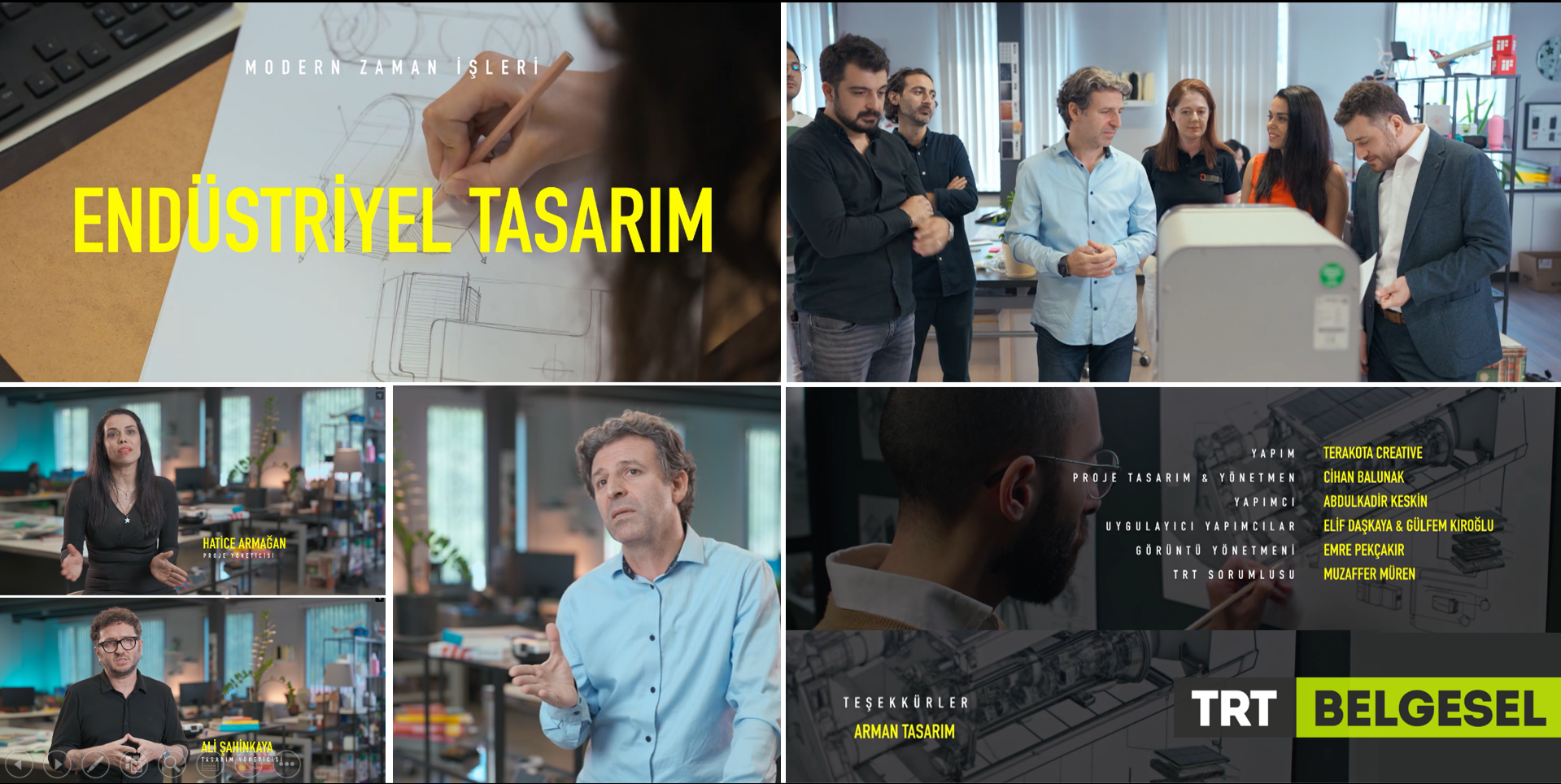
Milestones of Industrial Design: An Expert Perspective from Idea to Innovation with TRT Documentary Guests
Discussions on industrial design are enriched with the perspectives of expert academics who contribute to the field, deepening both its scientific and practical dimensions. These expert insights cover the technical, functional, aesthetic, and strategic aspects of the design discipline.
Notable guests include Assoc. Prof. Dr. Abdüsselam Selami Çifter, Prof. Dr. Alpay Er, Assoc. Prof. Dr. Aykut Coşkun, Dr. Fahrettin Ersin Alaca, Prof. Oğuzhan Özcan, Prof. Dr. Saniye Meltem Şen, Dr. Seher Oya Akman, and Assoc. Prof. Dr. Tengüz Ünsal. These academics are among the leading speakers who provide knowledge and analytical perspectives on the fundamental principles and modern development philosophies of industrial design.
From the Industrial Revolution to Modern Icons: The “Less but Better” Philosophy
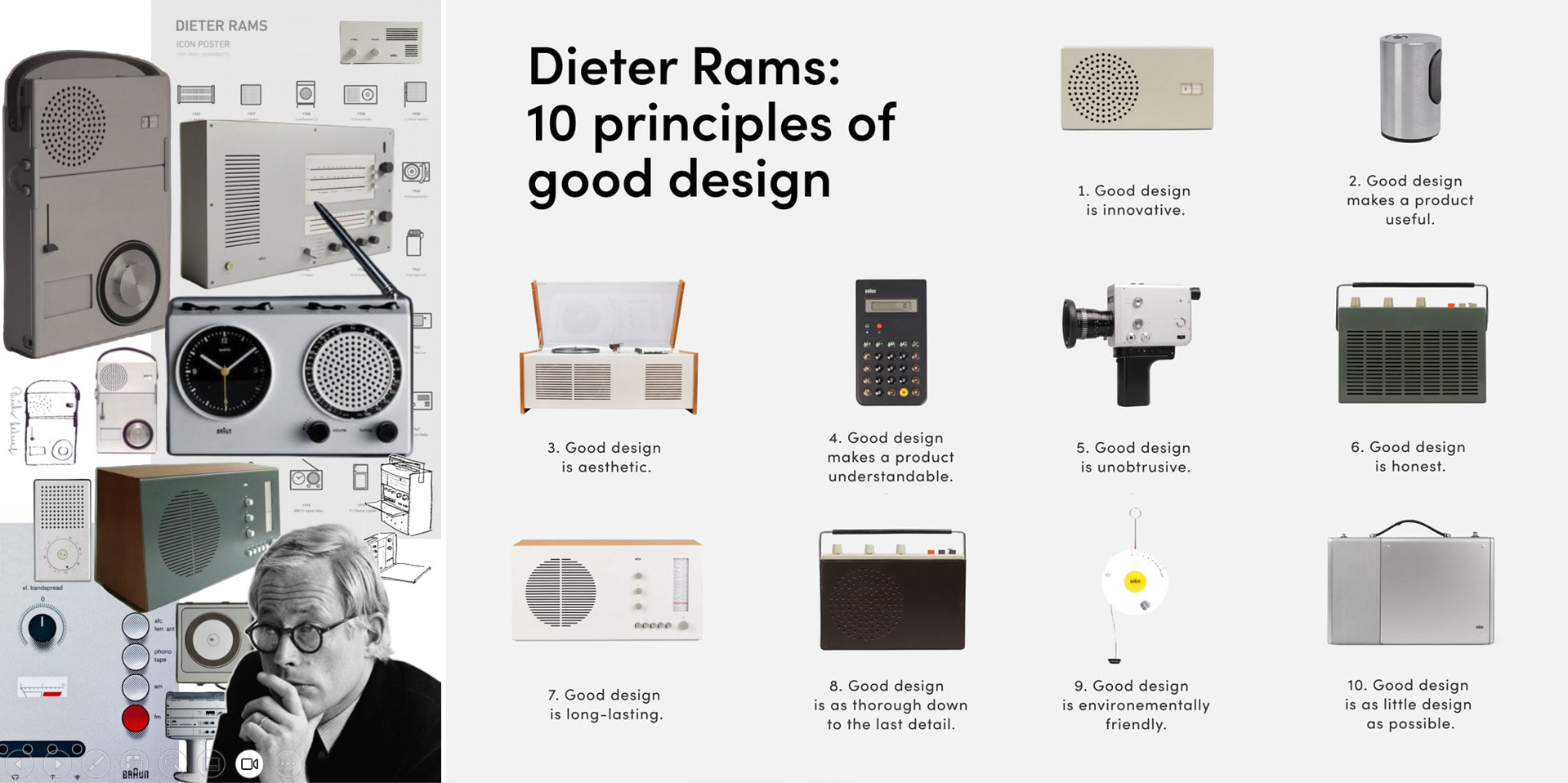
In the modernization journey of industrial design, the philosophy of Dieter Rams, which emerged in the mid-20th century, plays a critical role. Products such as the Braun S3 transistor radio designed by Rams in 1958 were recognized as modern works of art and exhibited at the Museum of Modern Art (MoMA) in New York, thanks to their minimalist design language. At a time when large wooden radios filled with complex buttons dominated the market, these designs introduced the “less but better” approach to the design world.
Rams’s iconic designs not only brought about an aesthetic transformation but also fundamentally simplified product use. For example, the SK4 radio-turntable could be switched on and begin spinning with a single hand movement, unlike older systems that required complicated steps such as manually adjusting the tonearm. This simplicity transformed technological complexity into a clear, intuitive experience and formed the foundation of Rams’s ten principles of good design.
The 10 Principles of Good Design: A Universal Philosophy
1.Good Design Is Innovative:
Innovative design always evolves alongside innovative technology, and the possibilities for innovation are never exhausted.
2.Good Design Is Useful:
Products must satisfy not only functional requirements but also psychological and aesthetic criteria.
3.Good Design Is Aesthetic:
Aesthetics are an integral part of usefulness; well-designed objects can and should be beautiful.
4.Good Design Makes a Product Understandable:
It clarifies the product’s structure and can even make the product self-explanatory.
5.Good Design Is Unobtrusive:
It should be neutral and restrained, leaving room for the user’s own expression.
6.Good Design Is Honest:
It does not make a product appear more innovative, powerful, or valuable than it truly is, nor does it attempt to manipulate consumers with promises that cannot be kept.
7.Good Design Is Long-Lasting:
By avoiding trends, it endures for many years, even in today’s consumer-driven society.
8.Good Design Is Thorough:
It is carefully considered down to the smallest detail; nothing should be arbitrary or accidental.
9.Good Design Is Environmentally Friendly:
It conserves resources and minimizes visual and physical pollution throughout the product’s lifecycle.
10.Good Design Is as Little Design as Possible:
This principle focuses on the essential and necessary elements, preventing products from being burdened with unnecessary details.
These principles can be seen not only as guidelines for designing everyday objects but also as a way of life. Even when the term “good design” is replaced with “a good human being,” the meaning remains intact. Since the objects we use influence our personality and well-being, industrial design functions like a formula for enhancing quality of life.
For this reason, agencies such as Arman Design merge innovation and commercial success through rational, human-centered approaches, placing people at the core of their design philosophy.
From Idea to Production: Strategy-Driven Approaches That Redesign Life
Arman Design’s philosophy of “DESIGN IS AN INVESTMENT” emphasizes that design is not merely an aesthetic activity, but a strategy that creates commercial value. This approach aims to guide projects to success by offering a complete product development experience that covers every stage—from conceptual ideas and design to engineering and production.
Arman Design measures its success not only through aesthetic and user-friendly solutions, but also through the realization of its designs and the commercial performance of the products brought to market. This philosophy forms a fundamental pillar of innovation strategy for companies seeking long-term competitive advantage.
https://www.trtbelgesel.com.tr/bilim-teknoloji/modern-zaman-isleri/modern-zaman-isleri-25051644

 The Future of Industrial Design in Turkey
  Design + Engineering: More Than Aesthetics